
SEO in 2026: Why Traffic Without Intent Is Useless
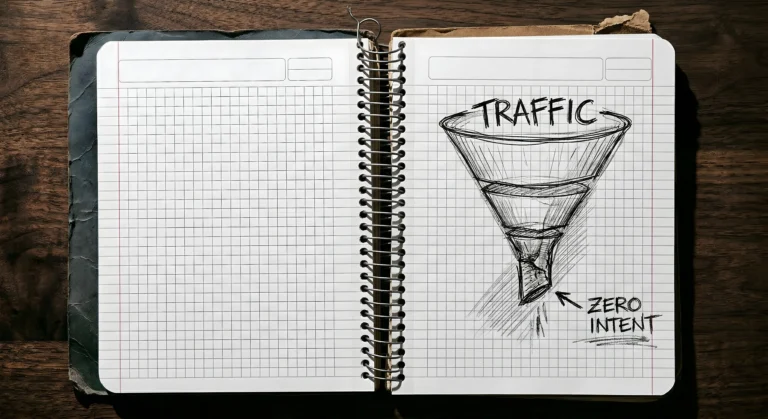
Getting 10,000 monthly visitors means nothing if none of them actually want what you offer. Most people still treat traffic like a trophy. More visitors, more success. That logic stopped working a long time ago.
Picture two people Googling right now. One types “what is SEO” because they’re curious, probably a student, just exploring. The other types “best SEO agency for my business” because they have a budget, a problem, and they’re ready to hire. Same topic. Completely different intent. If your page ranks for the first but not the second, you’re running a free library for people who were never going to pay you.
That’s the heart of SEO in 2026. And it’s quietly killing conversions for a lot of websites that look successful on paper.
What SEO in 2026 Really Looks Like
SEO in 2026 isn’t about chasing keywords anymore. It’s about understanding why someone searches in the first place.
Google has gotten scary good at reading intent. So good that if your content doesn’t match what the searcher actually wants, Google won’t show it. Doesn’t matter how clean your metadata is. Doesn’t matter how many backlinks you’ve built. If the intent doesn’t line up, you’re invisible.
Volume metrics are seductive. A keyword with 50,000 monthly searches looks great in a report. But if those 50,000 people are only browsing and your business needs paying clients, that number is meaningless.
The 4 Types of Search Intent You Need to Know
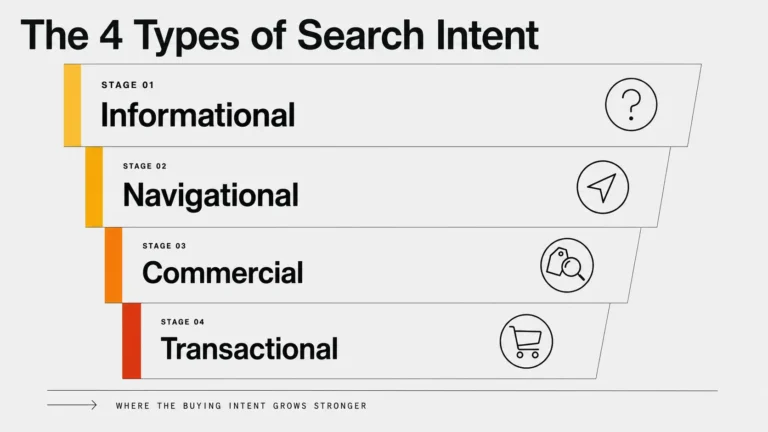
Every search falls into one of these four buckets. Knowing the difference is the foundation of SEO in 2026.
01. Informational
The searcher wants to learn something. Example: “how does SEO work.” They’re not buying today. They might never buy.
02. Navigational
This one is the simplest of the four. The person knows the brand, the tool, or the page they want. They just use Google as a faster way to land on it. A search like “Canva dashboard” or “Notion sign in” isn’t an opportunity for you to convert anyone. They came looking for a specific name, and if that name isn’t yours, they’re gone.
03. Commercial
This is the middle stage where someone has accepted they need to spend money but hasn’t decided on whom. They’re reading reviews, opening five tabs of competitor pages, and typing things like “Notion vs ClickUp” or “top email marketing software for small teams.” Your job at this stage isn’t to sell hard. It’s to show up with a clear, honest answer that helps them shortlist you.
04. Transactional
The searcher is ready to act right now. Example: “hire SEO consultant Calicut.” They have a problem and they’re looking for someone to solve it.
For service businesses, transactional and commercial keywords are where the money lives. Informational content has a role, but it should feed your funnel, not be your entire strategy.
Why the Wrong Keywords Quietly Kill Your Conversions
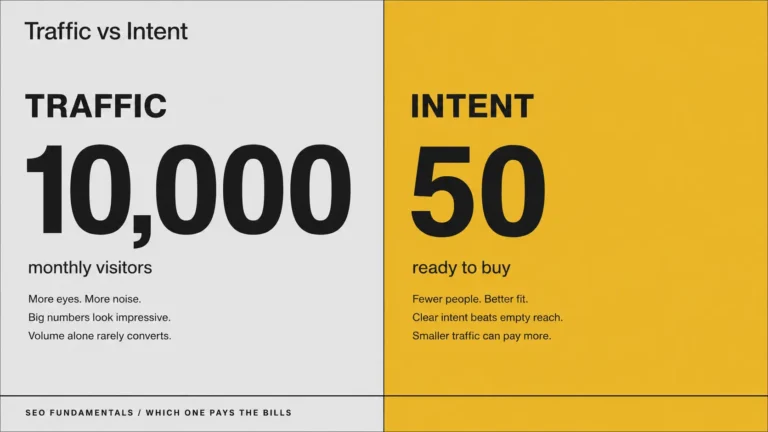
Ranking for the wrong search is a very efficient way to attract people who will never become customers.
Here’s how it usually plays out. You write a blog post targeting a high-volume informational keyword. You rank on page one. Traffic spikes. You feel great. Then you check your enquiry form and it’s silent.
The people reading your post were never going to convert. They got their answer and left. No bounce rate alarm. No red flag in Analytics. Your business still got nothing.
This hurts freelancers and small agencies the most. You don’t need 10,000 monthly visitors. You need 50 of the right ones. Intent-matched, problem-aware, ready to reach out.
How to Audit Your Keywords for SEO in 2026
Pull up your current ranking keywords and look at each one with fresh eyes. Ask a single question: what does someone actually want when they search this?
Here’s the process:
- Open the SERP for each keyword. What kinds of pages rank? Blog posts? Product pages? Service pages? That tells you what Google thinks the intent is.
- Flag any keyword where your content type doesn’t match the SERP pattern. That’s an intent gap.
- Check your conversion data. Pages with decent traffic but zero enquiries are usually intent mismatches.
- Pick five to ten transactional keywords in your niche. Are you targeting any of them with dedicated, conversion-focused pages?
- If you serve a local market, layer in location intent. Best digital marketing consultant Calicut is a completely different search from “digital marketing tips.”
Most people skip this audit. They set up a keyword list once and never touch it again. Meanwhile, the algorithm has moved on, searcher behaviour has shifted, and the content is still optimised for 2022.
The Bottom Line on SEO in 2026
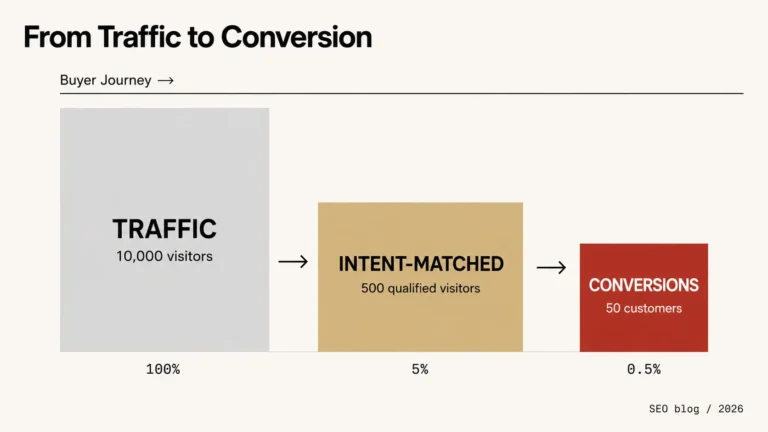
SEO in 2026 is not a volume game. It never really was, but now Google makes sure you can’t fake it. The sites winning today are the ones that know exactly who they’re writing for and what that person needs at that exact moment.
Traffic is a vanity metric if it isn’t tied to intent. Every visitor who lands on your page and leaves without doing anything isn’t just a missed opportunity. It’s a signal to Google that your content might not be the right answer. Over time, that compounds against you.
Whether you’re handling your own SEO or working with a consultant who gets this stuff, the conversation has to start with intent before it starts with volume. Get that right and everything else in your SEO strategy starts to click.
Frequently Asked Questions About SEO in 2026
What is search intent in SEO?
Search intent is just the why behind a search. Someone types a phrase into Google for a reason. Maybe they want a quick answer. Maybe they’re price shopping. Maybe they’re ready to hand over their credit card. The same words can mean different things depending on the person, and figuring out which version of “why” your page should answer is the whole game.
Why is search intent more important than search volume in 2026?
Volume used to be the big number everyone chased. Pick a keyword with high searches, rank for it, win. That math doesn’t work anymore. Google has gotten better at reading why people search, so a page that brings 10,000 of the wrong visitors gets buried over time. Meanwhile a smaller keyword that brings 200 of the right people can outearn it ten times over. Intent decides who actually pays you. Volume just decides who shows up.
How can I figure out what someone wants when they search a keyword?
Let Google show you. Run the search in a fresh browser session so your history doesn’t change the results, then look at what’s sitting at the top. Tutorials and explainer posts mean curiosity. Comparison articles mean someone is weighing their options. Pricing pages and service listings mean a buyer is close to deciding. Whatever Google has chosen to rank is your blueprint. Build a page that fits the same mould and you’ve matched the intent.
Can one page target multiple search intents in SEO in 2026?
Not effectively. Each page should serve one primary intent. Trying to satisfy informational and transactional searchers on the same page usually weakens both.
Your keywords are telling a story. Are you reading it right?
If your traffic looks fine but your enquiries don’t, intent is probably the gap. Message me on Instagram if you want a second pair of eyes on your SEO strategy.